Introduction to AOMP OnShore
Let's discover AOMP or try AOMP immediately with AOMP Platform.
System Architecture Overview
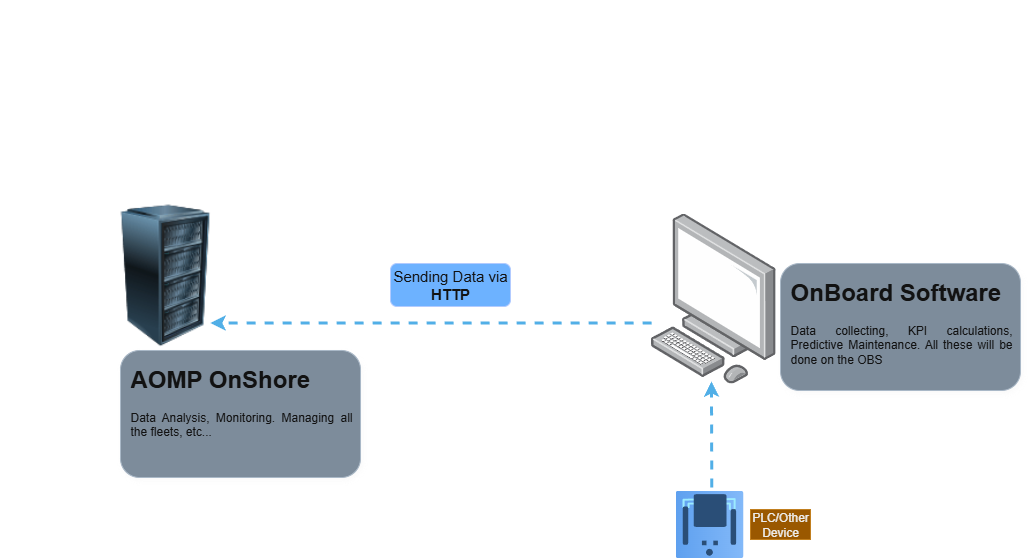
This diagram illustrates the architecture of the AOMP system, which consists of two main components:
AOMP OnShore
- Handles data analysis, monitoring, and management of all fleets.
- Provides centralized oversight and decision support.
OnBoard Software
- Responsible for data collection, KPI calculations, and predictive maintenance.
- Interfaces directly with PLCs or other onboard devices to gather operational data.
- Sends collected data via HTTPs to the AOMP OnShore system.
This setup enables efficient monitoring and predictive maintenance by leveraging onboard data collection and centralized analysis.
Key Features of AOMP OnShore
Once data is collected from the OnBoard Software (OBS) and sent to OnShore, AOMP OnShore provides a range of powerful features:
- Fleet-Wide Data Analytics: Aggregate and analyze operational data from all vessels for actionable insights.
- Real-Time Monitoring: Visualize live data streams and receive alerts for critical events or anomalies.
- KPI Dashboards: Track key performance indicators (KPIs) for vessels, equipment, and operations.
- Predictive Maintenance: Identify potential issues before they cause downtime using advanced analytics.
- Automated Reporting: Generate customizable reports for compliance, performance, and management review.
- Historical Data Trends: Access and compare historical data to optimize operations and maintenance schedules.
- User Management & Access Control: Securely manage user roles and permissions across the organization.
These features help customers maximize operational efficiency, reduce costs, and improve decision-making across their fleet.